Quick answer
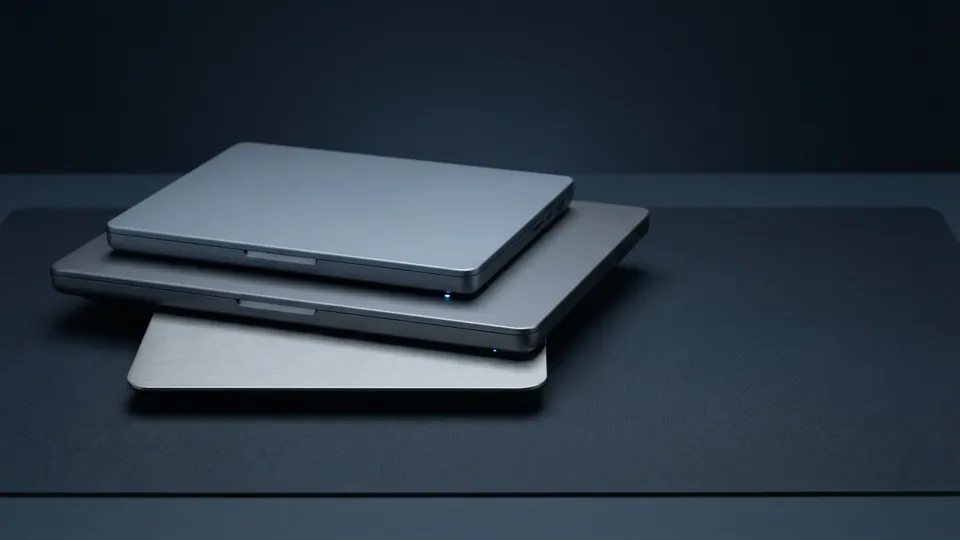
Choose 13 or 14 inches if the laptop travels with you most days, 15 or 16 if it mostly lives on a desk but sometimes moves, and 17 or 18 only as a desktop replacement. Weight tracks size closely; the practical daily-carry limit for most people is about 1.5 kg.
| 13 to 14 inch | 1.0 to 1.5 kg, carried daily |
|---|---|
| 15 to 16 inch | 1.6 to 2.2 kg, moved occasionally |
| 17 to 18 inch | 2.3 to 3 kg, desk replacement |
| Rule of thumb | If you carry it every day, stay under 1.5 kg |
| Reviewed | September 2026 |
What each size class is good for
| Size | Typical weight | Strengths | Trade-offs | Best for |
|---|---|---|---|---|
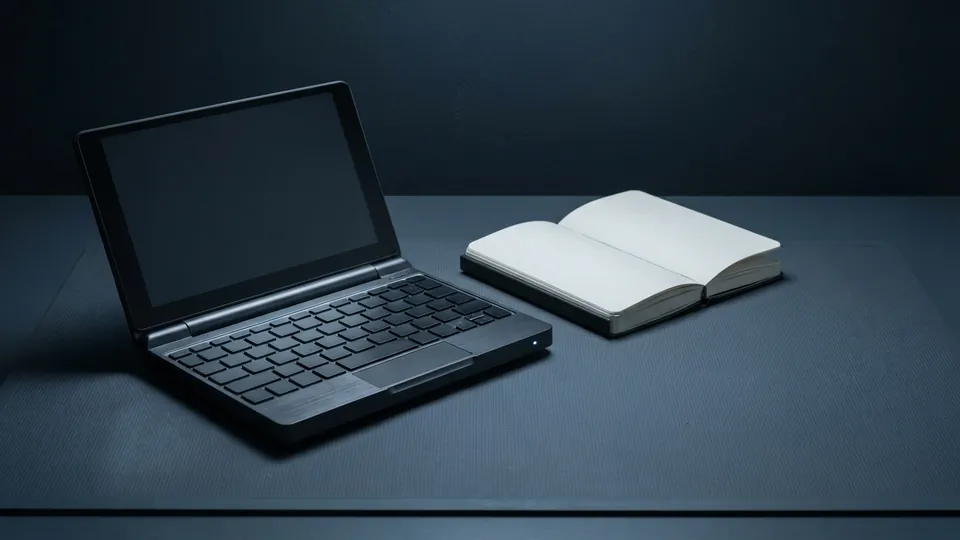
| 11 to 12 inch | 0.9 to 1.2 kg | Fits anywhere; long battery | Cramped keyboard; small screen for multitasking | Travel, note-taking, kids |
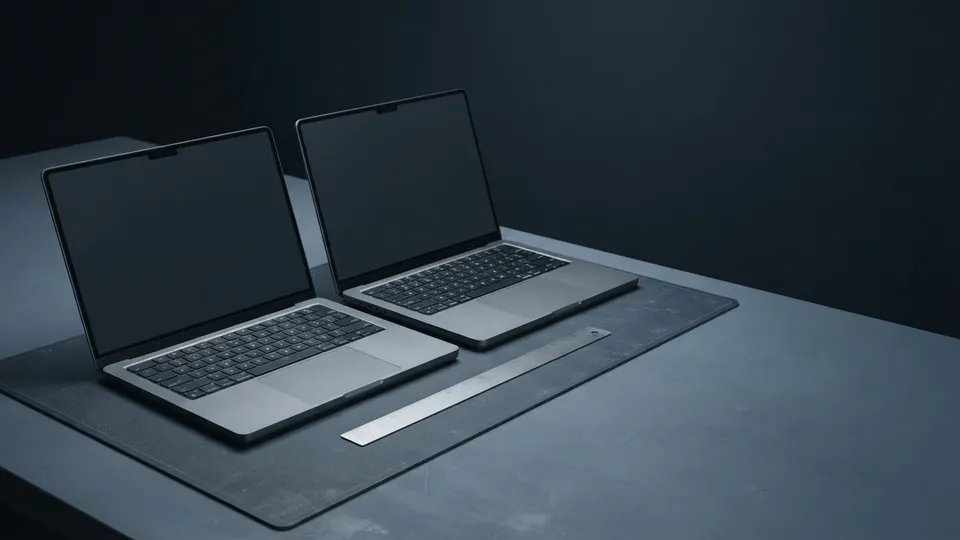
| 13 to 14 inch | 1.0 to 1.5 kg | Best balance of screen and portability | Fewer ports; less cooling for heavy work | Daily carry, students, most professionals |
| 15 to 16 inch | 1.6 to 2.2 kg | Room for a number pad, more ports, better cooling | Heavy for daily transport; bigger bag | Home and office use with occasional travel |
| 17 to 18 inch | 2.3 to 3.0 kg | Desktop-class screen and performance | Rarely leaves the desk; huge power brick | Gaming, video work, desktop replacement |
The trade-offs behind the size
Size is a proxy for several things at once. A bigger chassis fits a bigger battery, more ports and larger fans, so a 16 inch laptop can run a hotter processor quietly for longer than a 13 inch one with the same chip. A smaller chassis is lighter, fits on an airline tray, and usually has a screen with a taller aspect ratio (16:10 or 3:2) that suits documents. Keyboards change at 15 inches, where a number pad often appears and shifts the main keys left of centre, which some people never get used to. Screen resolution should scale with size: 1920 x 1080 or 1920 x 1200 is sharp enough up to about 14 inches; on a 16 inch screen 2560 x 1600 is noticeably crisper.
From 5 kg to 1 kg: how laptops shrank
The first commercially successful portables of the early 1980s weighed 5 kg and more, with tiny screens and no battery worth mentioning. By the mid 1990s a mainstream notebook was around 3 kg with a 12 inch screen. The 2008 to 2010 netbook boom proved people would accept a small screen for a 1 kg machine, and the thin-and-light category that followed brought that weight to full-size 13 inch laptops. Three changes did most of the work: solid-state storage replaced spinning drives, processors became efficient enough to cool without large fans, and displays lost their bezels so a given screen fit a smaller lid. Today's 14 inch laptop at 1.2 kg has a larger screen than a 2010 laptop at twice the weight.
A quick decision
- Carry it most days? Choose 13 or 14 inches, and weigh the bag with the charger included.
- Mostly at a desk but occasionally moved, and want a number pad or a bigger screen? Choose 15 or 16 inches.
- Never leaves the desk, or you need maximum performance? Choose 16 to 18 inches, and consider a desktop plus a cheap small laptop instead.
- Undecided between 14 and 16? Pick 14 and add an external monitor for the desk; it is the more flexible combination.
Size is one decision in the guide to choosing a laptop. For the smallest machines see what to buy instead of a netbook, and for the other lines on the sheet read the laptop comparison method. If you still need discs, note that the options for laptops with a CD or DVD drive are mostly larger, heavier machines, which is worth knowing before you settle on a size.
Related reading
 How to Compare Laptops: Reading a Spec Sheet ProperlyBuying Guide
 Small Laptops: What Replaced the Netbook and What to Buy InsteadBuying Guide
 Laptop Posture: How to Use a Laptop Without Wrecking Your NeckLaptop Care
 Laptops With a CD or DVD Drive: What Your Options Are NowBuying Guide
 Best Laptop for Teachers: Specs for the Classroom and MarkingBuying Guide
Common questions
Is a 13 or 15 inch laptop better?
13 to 14 inches if you carry it regularly; 15 to 16 if it mainly stays put and you want more screen, ports and a number pad.
How heavy is too heavy for a laptop?
For daily carrying, most people find anything over about 1.5 kg tiring by the end of a week. Occasional carrying tolerates 2 kg.
Is a 14 inch screen big enough for work?
Yes for documents and browsing, especially with a 16:10 aspect ratio. For side-by-side windows all day, add an external monitor.
Do bigger laptops have better battery life?
Not reliably. They fit bigger batteries but also power bigger screens and hotter chips. Battery life depends more on the processor class than on size.
What size laptop fits on an airline tray table?
13 and 14 inch models fit comfortably; 15.6 fits on most but is tight when the seat in front reclines; 17 inch generally does not.
Sources
- Museum of History and Industry: Osborne 1 portable computer, ca. 1981
early commercial portables weighing over 10 kg.
- Science Museum Group: Osborne 1 Portable Computer
the first commercially successful portable computer.
- Apple Support: MacBook Air (M2, 2022) Tech Specs
a current 13 inch laptop weighing about 1.2 kg.
Questions from the forum
Ask the communityIn this section
| Guide | Type |
|---|---|
| How to Compare Laptops: Reading a Spec Sheet Properly | Article |
| Gaming Laptop Buying Guide: What Actually Matters | Article |
| Laptops With a CD or DVD Drive: What Your Options Are Now | Article |
| Laptop Size and Weight Guide: 13, 14, 15 or 17 Inches? | Article |
| Small Laptops: What Replaced the Netbook and What to Buy Instead | Article |
| Home Wi-Fi Router Buying Guide (and When to Flash Custom Firmware) | Article |
| Laptop Specs for Running AI Models Locally | Article |
| NPU Laptops Explained: What an AI PC Really Does | Article |
| Choosing a Laptop for Writing in the AI Era | Article |
| Is 8 GB of RAM Enough for a Laptop? | Article |
| Is 16 GB of RAM Enough? When You Need More | Article |
| Best Laptop for Engineering Students: What Your Courses Need | Article |
| Best Laptop for Nursing Students: What Programs Really Require | Article |
| Best Laptop for Teachers: Specs for the Classroom and Marking | Article |
| Best Laptop for High School Students: A Parent's Guide to Four Years | Article |
Marcus Hale, Editor. Sets up, fixes and chooses laptops for other people, then writes down what worked. About the editor. About this site. Reviewed September 2026.